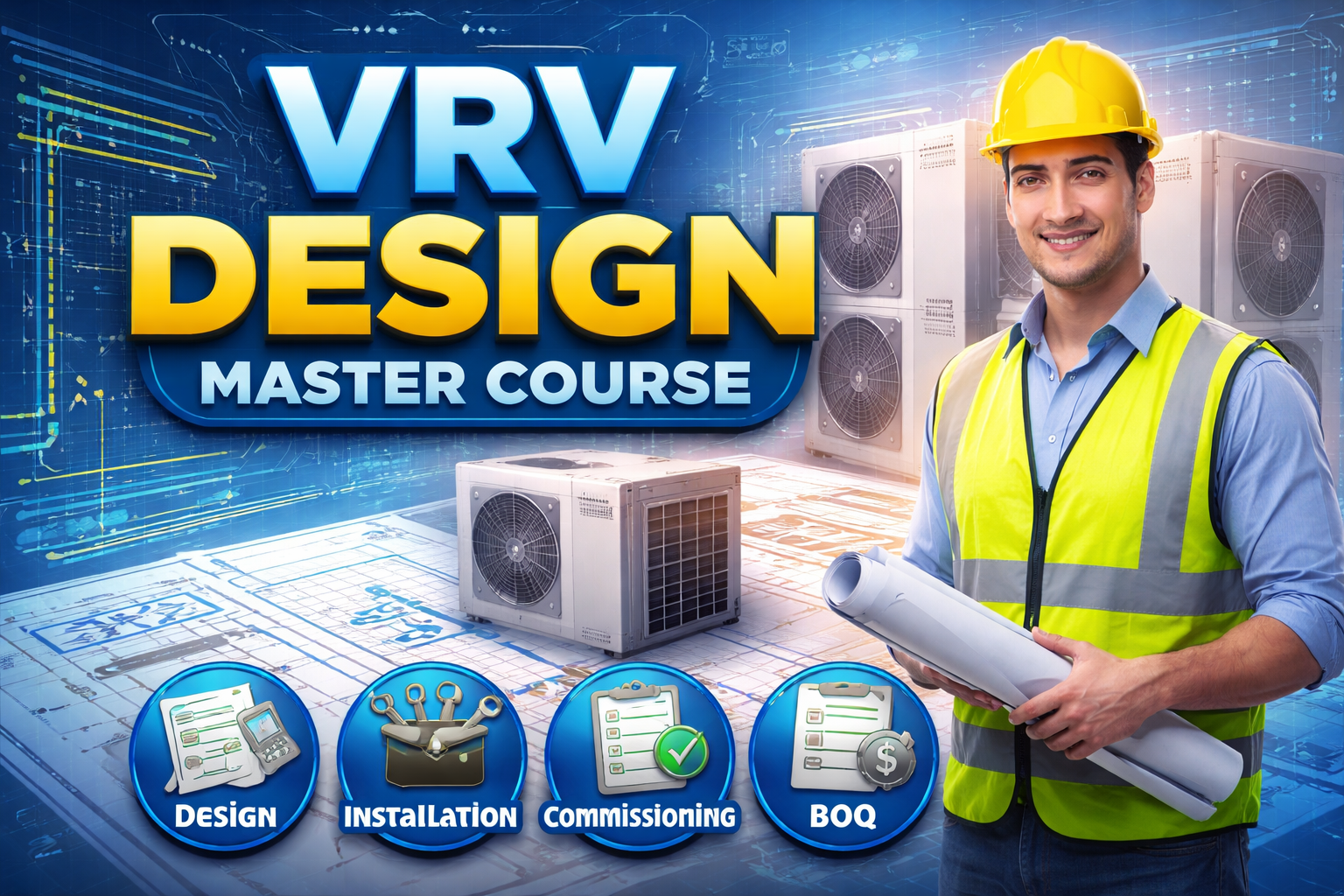
VRF/ VRV System Design ~ Master Course
About Course
This comprehensive course on VRF/VRV HVAC systems is designed to help students and professionals understand the complete process of designing, installing, testing, and commissioning modern air-conditioning systems used in commercial and residential buildings. The course begins with the fundamentals of Variable Refrigerant Flow (VRF) / Variable Refrigerant Volume (VRV) technology, explaining how the system works, its main components, different system types, and the advantages of VRF/VRV compared with conventional HVAC systems. Students will also learn the basic design principles and key engineering considerations required for efficient and reliable system performance.
In the design section, learners will understand the step-by-step VRF/VRV design process, including how to select the correct outdoor and indoor units, perform refrigerant pipe sizing, and design an effective system layout. The course also teaches how to prepare a professional Bill of Quantities (BOQ), identify required materials, and estimate project costs, which are essential skills for HVAC engineers and MEP designers.
The installation module focuses on practical site practices, including proper installation of outdoor and indoor units, refrigerant piping layout, electrical wiring and control connections, and industry best practices to ensure system reliability. Students will also learn how to perform leak detection procedures and preliminary system testing before starting the system.
Finally, the course covers testing and commissioning, where students will learn system start-up procedures, functional testing, parameter verification, and troubleshooting common VRF/VRV errors. It also explains how to prepare commissioning documentation and optimize system performance for maximum energy efficiency and long-term operation.
By the end of this course, students will gain practical knowledge and confidence to design, install, and commission VRF/VRV HVAC systems, making it highly valuable for HVAC engineers, MEP designers, technicians, and professionals working in building services and air-conditioning projects.
Course Content
Module 01 ~ VRF/VRV System Fundamentals & Design Basics
-
1. VRF VRV Course Syllabus Introduction
04:24 -
2. What is VRF and VRV
04:18 -
3. What is Difference between VRF and VRV
02:36 -
4. VRF system Schematic
02:17 -
5. How VRV Differ from conventional system
03:42 -
6. VRF system Piping Length
02:00 -
7. Where we use VRV system
01:26 -
8. VRF and VRV system Component
03:56 -
9. Types of Indoor Unit Used in VRF & VRV system
02:02 -
10. VRV Piping Network, Piping Diagram, Central Remote and VRV drawing Sample
06:59 -
11. VRF and VRV Control & Communication
04:23 -
12. Type Of VRV System and Its Advantages
04:16 -
13. Basic VRV Design Principles and Consideration
11:49 -
14. Daikin VRV Catalog Detailed Explanation
19:56
Module 02 ~ VRF/VRV Design & BOQ Preparation
Module 03 ~ Installation Best Practices
Module 04 ~ Testing & Commissioning
All Resources Documents For Download
Student Ratings & Reviews